Sooner or later every HubSpot template has to deal with a list: HubDB rows, a repeater group in a custom module, blog posts, or a menu. The data rarely arrives...
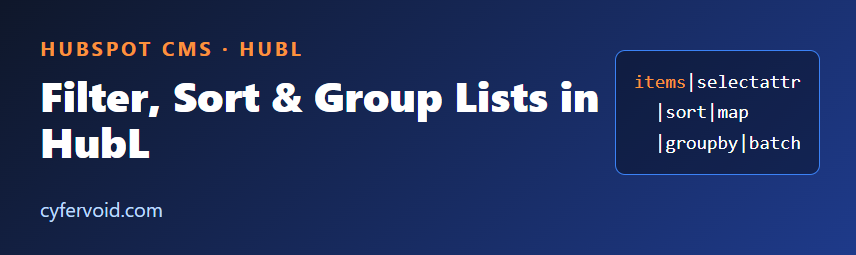

Sooner or later every HubSpot template has to deal with a list: HubDB rows, a repeater group in a custom module, blog posts, or a menu. The data rarely arrives...
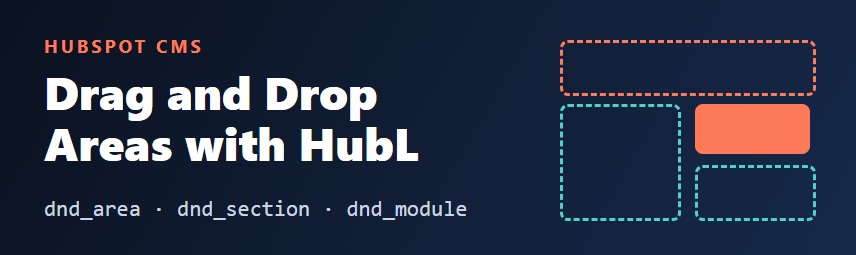
A rigid template makes every layout change a developer ticket. A fully open page lets editors break the design. Drag and drop areas sit in between: you decide where editors...
Every site gets broken links: a mistyped URL, a deleted page, an old link in someone else's newsletter. What matters is what the visitor sees next. A bare "page not...
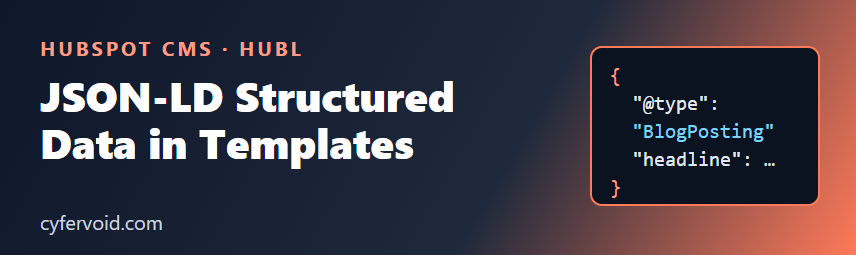
Structured data tells search engines what a page is about in a machine-readable way. The format Google recommends is JSON-LD: a small <script type="application/ld+json"> block that describes the page using...
Every HubL template eventually prints a value that someone else controls: a URL parameter, a text field filled in by an editor, a HubDB cell, a form value. If that...
Dates look simple until a visitor in another country sees an event at the wrong hour, or a blog card shows 1730764800000 instead of a readable date. HubL has built-in...
A common request on HubSpot sites: "show our three latest articles on the homepage." You do not need a third-party widget or a JavaScript call to the API. HubL can...
The HubSpot tracking code records a page view when the page loads. That is exactly what you want on a classic website, but a single-page application (SPA) changes the URL...